The "Four-Beats" Way of Following Nature’s Rhythm
The Canada Bunchberry (Cornus canadensis), is ubiquitous in North America's northern forests.
"Quatre-temps" is the common name in French language for this special plant, which has a shape that lends itself to reflection.
Its four sepals, false petals, sometimes grow in tandem with four leaves.
Like four beats, in keeping with the French name.
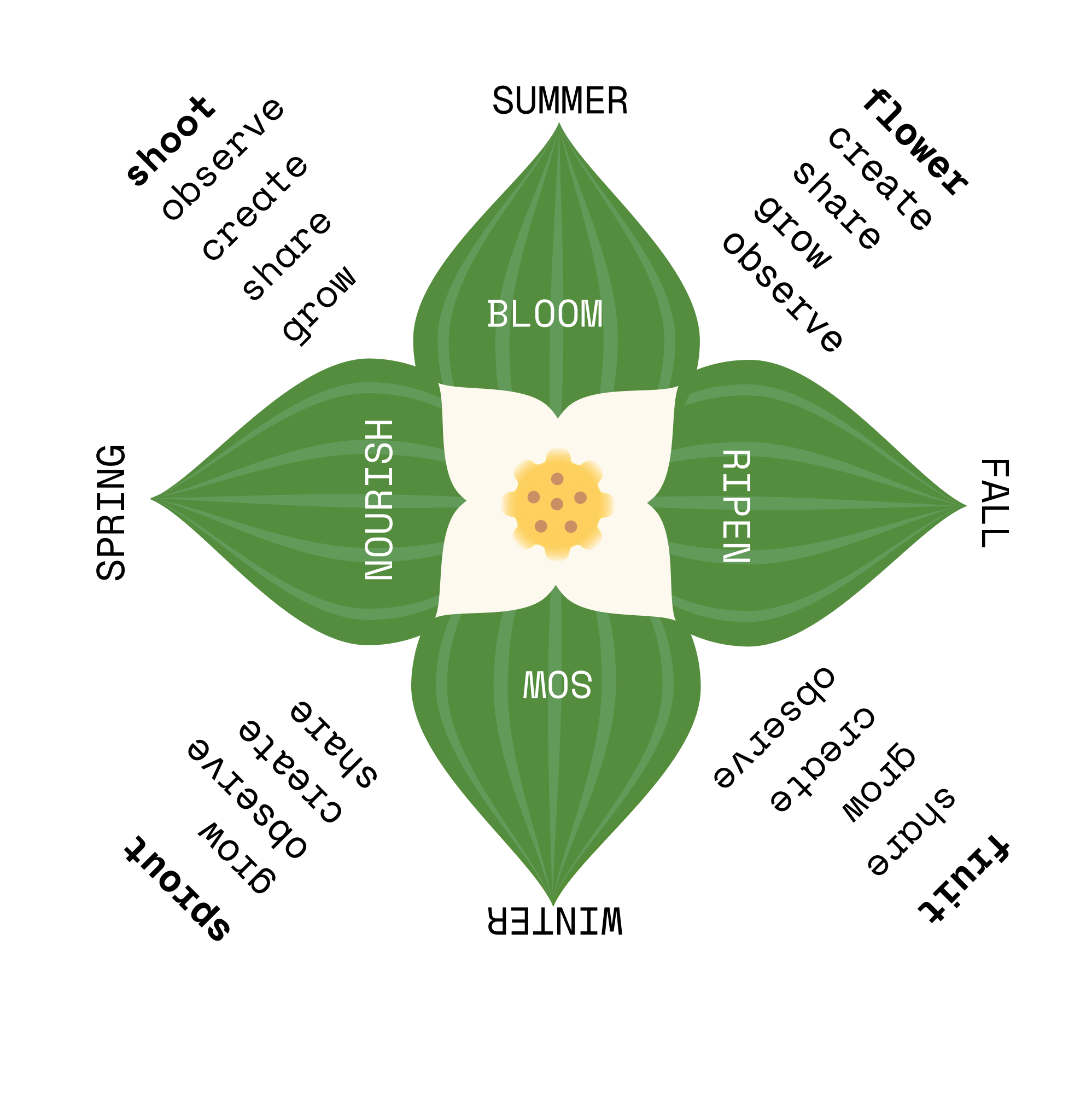
Four beats, like four seasons: SPRING, SUMMER, FALL, WINTER
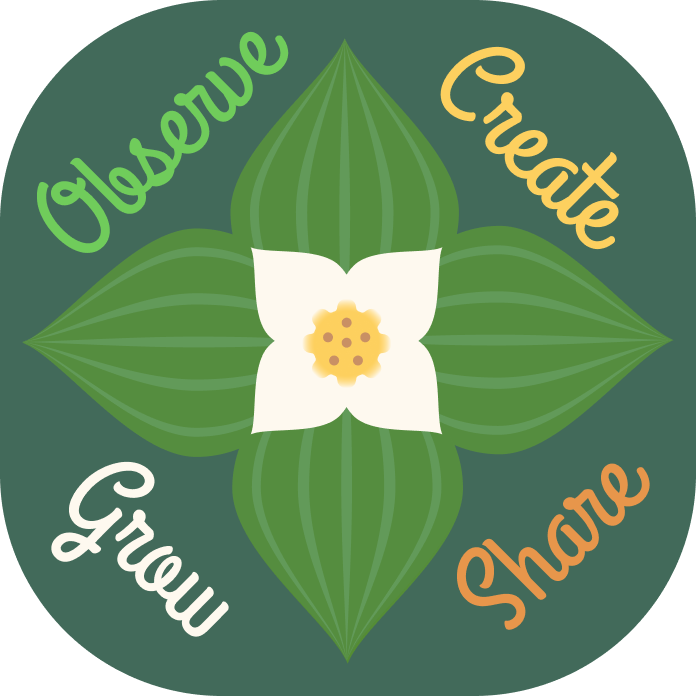
Four beats, like four steps: OBSERVE, CREATE, SHARE, GROW
FOUR STEPS
- First, we observe nature.
- Then, we create based on our observations.
- Next, we share the fruits of our research, whether they be our lessons or our creations.
- Finally, we grow as we learn.
Four beats, like four stages: SPROUT, SHOOT, FLOWER, FRUIT
Four beats, like four times! We can go out observing nature as much as we want, but the greatest and most impressive changes will come with time.
Let's visit the places we love, or discover new ones, throughout the year.
FOUR SEASONS, FOUR STAGES, FOUR TIMES- Learning in four beats takes place over the course of four seasons.
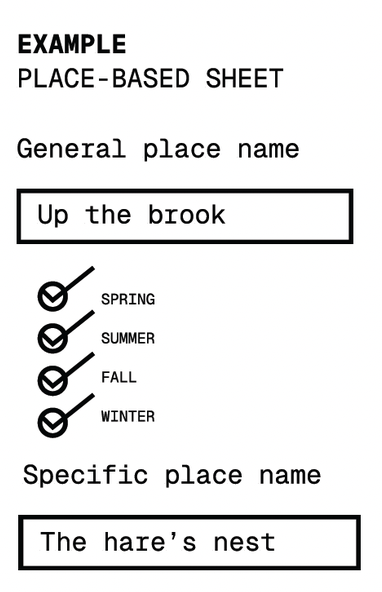
- It is a place-based learning experience.
- To follow the cycle to its conclusion, one must return to the same place during the four seasons and apply the four steps.
- We name the place a preliminary name.
- We will move on to the next stage each season, until we have filled out our observation sheet for a location.
- We will then have learned more about that location.
- We will therefore find a specific name for the location and add it to our sheet.
Guidelines
- You can start at any time of year.
- A journal is the preferred medium for connecting with nature.
- See the nature journal page for more details on this practice.
- Choose a place near you.
- Visit it at least once each season and fill out a two-page spread in your journal with your observations each time.
- You can visit the place as many times as you like.
- The location form can be attached to the journal or included in it.